From our news archive
ISO meeting, PCR, in Brussels
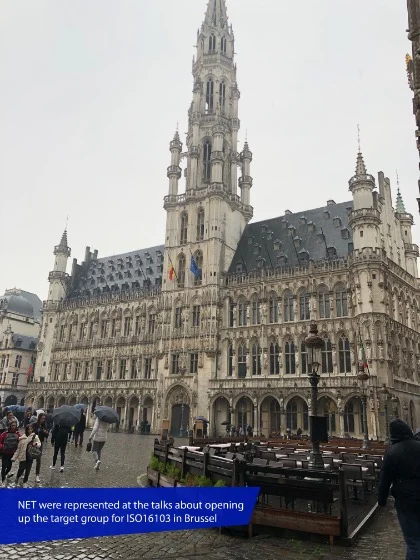
NET was present at the ISO meeting in Brussels the week before Easter and had the only two representatives from the Nordics at this informal meeting in the group; "ISO/TC122/SC3/WG8". The aim of the meeting was to provide a basis for starting a working group which will continue to work on finding a solution to the puzzle: "How to UN certify plastic packaging made from recycled material?". To form the group, a minimum of five countries had to commit to participating. NET committed to this as the only representative from Norway together with five other countries, and thus ensured a successful meeting.
Among the 34 present at the meeting were representatives from the largest polyethylene manufacturers, European blow molding and injection moulders, a few of the European testing institutes and the head of the working group in ISO...WG8.
NET has set itself the goal of being the first in the Nordic region with UN-approved plastic packaging made from recycled material, as we know that it means a lot to our customers, and a lot to the planet. Maxence Wittebolle from BVI, who organized the meeting, informed how together with Mauser they had obtained a Belgian approval for injection molded packaging for clinical waste (for national use only).
Work is now underway to reactivate the "target group" to ISO 16103, which regulates the testing of recycled plastic packaging. The purpose is to pressure the bureaucracy in Geneva to change the regulations so that it will be compatible with the current industrial situation and the EU's goals. This is a process that is normally very time-consuming. Work is now being done from several teams at the same time. NET sees the need for such a rule change as it is necessary to increase the degree of reuse for plastic that has been in plastic packaging before, while at the same time that recycled plastic can be used in new plastic packaging. This is absolutely necessary for a sustainable packaging industry and a functioning circular economy. If we divide the plastic in the packaging into two segments, PCR plastic and PIR plastic, it means that the UN regulation only allows testing and certification of plastic recovered after collection from industry (PIR), while plastic from packaging collected from consumers (PCR) is not permitted to be used in dangerous goods packaging. The group agreed to try two parallel courses: 1. Changing the legal text in the UN regulation so that you can use recycled plastic of all types as long as you have control over the mechanical properties of the final product. In the 90s, what was thought of as permitted plastic was packaging where you had control over the entire loop: producer - filler - customer - producer. This constitutes a very small part of the used plastic packaging on the market and will make it impossible to fulfill the EU's goal that all plastic packaging must be reusable or recycled by 2030. 2. Start a working group in ISO with the aim of new regulations for the use of recycled plastic in dangerous goods packaging.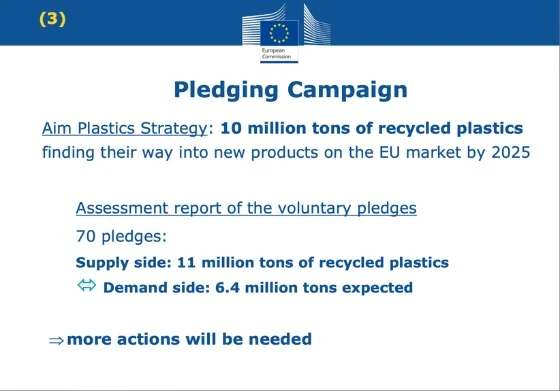 NET otherwise believes that plastic produced from partly virgin material and partly recycled material optimized according to the raw material supplier's own specifications should not be labeled as recycled plastic but given a new designation (name suggestions are gratefully received) and in this sense can be treated like any other plastic material.